
"HANDS ON" BASIC TRAINING CURRICULUM FOR MACHINE-BASED PEDICURE
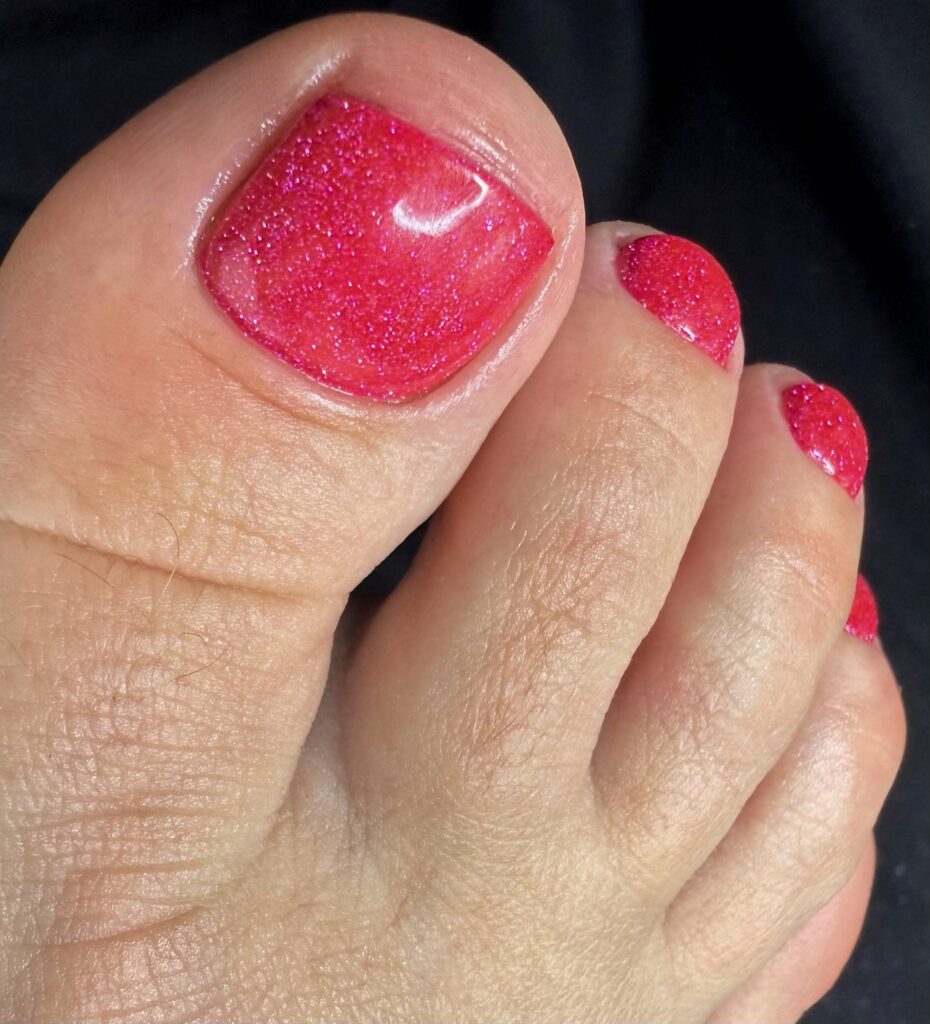
Study Group
Hairdressing and beauty services
Volume of learning
6–8 academic hours a day, 5 days a week.
Basis for curriculum design
Mandatory competences for the professional standard 'Pedicurist, nail technician level 4'.
Learning objective
The course is designed as a further education programme for adult learners who wish to acquire the practical skills required to carry out professional machine pedicures.
The principle behind HANDS ON training is learning through practical work. The training course is not structured around a separate, lengthy theoretical section – the necessary theory is covered during practical work, linking the knowledge directly to real-life situations and working methods.
The aim of the training is to teach participants not only how to carry out the procedure technically, but also to see, feel and understand what he is doing and why.
An important part of the training involves mastering ergonomic working techniques, developing manual dexterity and visual acuity, assessing the condition of feet and nails, and the ability to identify abnormalities and the underlying causes of potential problems.
Learning outcomes
Graduate of the training:
is familiar with the basic anatomy of the foot and nails and is able to assess the condition of the feet and nails;
is able to identify problematic nails, changes in the skin and deformities of the toes, and knows when it is necessary to refer a client;
understands the possible causes of the most common problems and is able to draw attention to them within the limits of their competence;
complies with hygiene requirements and is able to prepare their workspace, tools and themselves correctly;
uses ergonomic working techniques whilst working and is able to position themselves and the client’s leg in a way that allows them to work comfortably and with control;
is able to select the drill bits required for the job and to use a small, well-thought-out range of bits for various purposes;
is able to select the appropriate technique, movement and pressure for the drill bit, depending on the area being worked on;
is able to work on the basis of their professional judgement and assess the reaction of the skin and nails whilst working;
is able to carry out a dry pedicure: treating the nails and cuticles, treating the skin on the soles of the feet, exfoliation and care;
is able to process sole leather in a controlled manner and achieve a smooth finish without over-processing the leather;
is able to visually assess the results of their work and recognise when an area requires further processing and when processing should be stopped;
is able to select and use appropriate care products;
understands the possibilities and limitations of using cosmetic products on toenails;
is able to apply gel to toenails correctly and to assess when it is appropriate to use gel and when it is not;
is able to communicate professionally with clients, explain their observations and provide advice on home care;
is able, within the limits of their competence, to advise clients on habits that affect the health of their feet and nails;
is able to photograph their own work and carry out basic photo editing to compile a portfolio.
Target group
Adult learners wishing to acquire basic pedicure knowledge and skills.
Teaching method – HANDS ON
The training is predominantly practical in nature.
Theory and practice are not treated as two separate parts. The necessary theory is taught alongside practical work – learners can immediately apply the knowledge they have gained and see and experience how it relates to real-world work.
During the training, the instructor draws attention to the working posture, the position of the hands and tools, the movement of the drill bit, the pressure applied, the reaction of the skin and nails being treated, and the visual result of the work.
The aim is not to teach a specific sequence of movements by heart, but to develop the learner’s ability independently observe, assess, understand and select the appropriate working method for the situation.
Particular attention is paid to ensuring that learners acquire the right work habits whilst still on the course.
Learning environment
The course takes place at Pediluxus Studio, which is equipped with all the equipment required for practical pedicure training: a pedicure chair, a nail drill, drill bits, tools, equipment for sterilisation and disinfection, and adequate task lighting.
The learning environment enables students to explore theory in tandem with practical work and to practise the techniques they are learning under the direct supervision of a tutor.
Learners use the necessary personal protective equipment, and the requirements for hygiene and workplace preparation are practised.
Teaching materials and resources
In HANDS ON training, learning takes place primarily through practical work, and no separate theoretical notes are used during the course.
Theoretical knowledge is conveyed through practical work, in line with the situation under consideration, and is immediately linked to a specific work technique, problem or observation.
Learning is supported by:
practical demonstrations and hands-on guidance from the trainer;
joint analysis of situations that arise in the course of work;
real-life examples of various conditions affecting the nails, skin and toes;
tools, drill bits and care products used in pedicures;
individual feedback provided during practical work.
The principle behind the training is that learners can immediately put their new knowledge into practice, experience it and apply it.
Course content
The training course covers and provides practice in:
the use of personal protective equipment and hygiene requirements;
preparing the workplace and work equipment;
the basic anatomy of the foot and toenail;
recognising the most common nail and skin problems;
the detection of toe deformities and their potential impact on the toenails and feet;
situations where a cosmetic procedure is not carried out or the client needs to be referred elsewhere;
an ergonomic working posture and the correct positioning of the client’s leg;
the safe use of nail drills and drill bits;
the use of a minimal yet carefully considered selection of drill bits for various purposes;
the development of tactile perception: pressure, movement and awareness of the area being worked on;
nail and cuticle care;
the treatment of the sole’s leather and the achievement of a smooth finish without excessive processing;
developing a visual eye and evaluating the results of one’s own work;
the selection and correct use of care products;
the correct use of the gel on toenails and the restrictions on its use;
communicating with customers and establishing professional relationships;
educating clients and providing advice on home care;
identifying the causes of potential problems and clarifying them within the limits of one’s competence;
photographing your work and basic photo editing for your portfolio.
Evaluation
The achievement of learning outcomes is assessed throughout the course of the training programme through practical work.
Among other things, the trainer assesses:
compliance with hygiene requirements and the preparation of the workplace;
the safe and appropriate use of work equipment;
ergonomic working practices;
the selection and handling of drill bits;
manual dexterity and control over one’s work;
the ability to spot changes in the nails, skin and toes;
carrying out dry pedicure procedures independently;
visual assessment of the final result;
communicating with customers and providing maintenance advice.
Understanding of theoretical knowledge is assessed through practical work, oral discussions and questions.
Graduation and documents issued
To complete the course, students must attend the required number of teaching sessions and achieve the learning outcomes set out in the curriculum.
The achievement of learning outcomes is demonstrated through practical work that has been assessed positively and an oral assessment of knowledge.
Upon fulfilment of the requirements, the student will be issued with identification.